

What Attachment Styles Are (and Why They Matter in Adult Relationships)
Attachment theory explains how people learn to look for safety, closeness, and support from the people who matter most. Put simply, your attachment style acts like an internal “map” for relationships: how safe it feels to depend on someone, how you respond to distance, and what you do when you feel stressed or uncertain.
These patterns often start early, shaped by caregiving (how consistently comfort and attention were available), temperament (like sensitivity to stress), and later experiences such as friendships, long-term partners, trauma, or steady support. And because relationships keep teaching us, attachment isn’t set in stone. People can shift over time, especially through repeated experiences of reliability, repair, and emotional safety.
A few misconceptions are worth clearing up. An attachment style is:
- Not a fixed label: You may show different patterns with different partners, or under different stress levels.
- Not a diagnosis: Attachment styles are a framework for understanding, not a mental health disorder.
- Not an excuse: Understanding your pattern can explain reactions, but it doesn’t justify controlling, abusive, or harmful behavior.
Attachment shows up in everyday moments: how quickly you expect replies to texts, how much reassurance you need, whether you set or respect boundaries, how jealousy shows up, and what happens after conflict–do you withdraw, pursue, escalate, or repair?
A useful concept here is “earned secure attachment.” Through corrective experiences–like a consistently responsive partner, healthier communication, and therapy–many people build more secure ways of connecting, even if earlier relationships were rough.
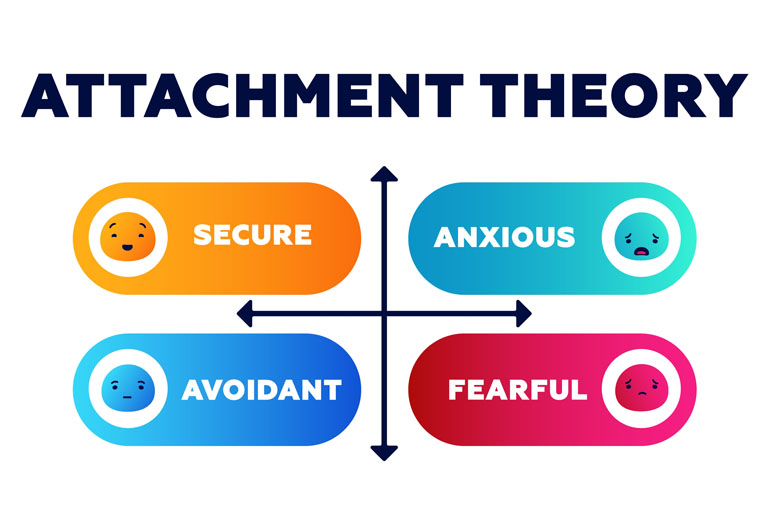
The Four Common Attachment Styles: Core Beliefs and Stress Responses
Attachment styles describe what you tend to do when closeness feels safe, uncertain, or threatened. It helps to think of them as patterns rather than permanent personality types. They also tend to get more intense under stress.
Secure Attachment
Core belief: “I can rely on others, and I can handle things on my own.” People with more secure patterns are generally comfortable with both intimacy and autonomy. They’re more likely to name needs directly, ride out normal relationship ups and downs, and reconnect after conflict through repair (apologizing, clarifying, problem-solving).
Anxious (Preoccupied) Attachment
Core belief: “I might be left; I need closeness to feel safe.” This style is often highly sensitive to signs of rejection or distance. Under stress, reassurance-seeking can spike, and “protest” behaviors may appear: pursuit, repeated texting, rumination, or escalation to get a response.
Avoidant (Dismissive) Attachment
Core belief: “Depending on others is risky; I should handle it myself.” Avoidant patterns prioritize independence and may minimize emotional needs. When emotions run high, a person may withdraw, shut down, change the subject, or intellectualize (“let’s be logical”) to feel less vulnerable and more in control.
Disorganized (Fearful-Avoidant) Attachment
Core belief: “I want closeness, but it may not be safe.” This can create a push-pull dynamic–reaching for connection, then backing away once it’s there. Under stress, someone may swing between pursuit and withdrawal, feel overwhelmed easily, or have trouble predicting their own reactions.
Every style can come with strengths. Secure attachment supports resilience and repair; anxious attachment often brings emotional attunement and commitment; avoidant attachment can bring self-sufficiency and calm in a crisis; disorganized attachment may reflect adaptability and sensitivity to risk. Common triggers across styles include ambiguity, unmet expectations, conflict, and inconsistent availability.
- Quick self-check: When you feel threatened in a relationship, do you move toward, move away, or swing between both?
- Name the need: Are you seeking reassurance, space, clarity, or a calmer way to reconnect?
- Track repair: After conflict, what helps you return to safety–words, time, touch, or a plan?
How Attachment Styles Show Up in Relationship Cycles (Conflict and Repair)
Many couples assume they’re fighting about the problem (chores, sex, money, parenting). Often, what keeps things stuck is the cycle: the predictable pattern that kicks in when one or both partners feel threatened, rejected, criticized, or unsafe. Once you can name the cycle, the focus shifts from “who’s right?” to “what happens to us when we’re stressed?”
A common loop is anxious pursuit paired with avoidant withdrawal. The anxious partner may look for reassurance through questions, repeated texting, rehashing the issue, or escalating to get a response. The avoidant partner may try to cope by minimizing, going quiet, changing the subject, or leaving to bring the emotional intensity down. Each approach makes sense to the person using it–but it can activate the other partner’s core fear: pursuit can feel like pressure or control, while withdrawal can feel like abandonment. Then the cycle strengthens itself.
Disorganized patterns can make conflict feel even less predictable. Someone may give mixed signals (reaching for closeness, then rejecting it), shift quickly between anger and need, or struggle to trust repair once things calm down. That unpredictability can raise the threat level for both people.
Communication Under Threat
- “Protest” behaviors: accusations, scorekeeping, repeated calls/texts, threats to leave, testing the partner’s love.
- Deactivating strategies: stonewalling, sarcasm, “it’s not a big deal,” focusing on facts only, withdrawing affection.
Trying to “win” arguments usually backfires because threat responses shrink empathy, curiosity, and problem-solving. When your nervous system is on high alert, it prioritizes protection over connection. It’s not very poetic, but it’s accurate.
What Repair Looks Like
Repair isn’t acting like nothing happened. It means acknowledging impact (“I see that hurt you”), owning your part, calming the nervous system (slowing down, pausing, grounding, using a gentle tone), and agreeing to come back to the topic later with clearer requests. Over time, repeated repair builds safety–and safety makes the original problem easier to tackle.
Signs Attachment Patterns May Be Affecting Your Relationship (and When to Seek Help)
Attachment insecurity often shows up less as one dramatic issue and more as repeating themes that wear things down over time. If you notice the same pattern across partners or across years, it may help to look beneath the surface problem.
Common Recurring Themes
- Repeated breakups and makeups, or frequent “almost ending it” moments.
- Chronic jealousy, checking, or needing constant reassurance to feel okay.
- Fear of commitment, or feeling trapped when closeness increases.
- Emotional numbness, disengagement, or feeling like you’re “watching yourself” in the relationship.
Conflict Markers That Suggest a Stuck Cycle
- Stonewalling (shutting down, going silent, leaving and not returning to repair).
- Contempt (mocking, eye-rolling, insults) or frequent escalation.
- Inability to recover after disagreements: the fight ends, but safety doesn’t return.
Impact on Your Wellbeing
- Rising anxiety or depressive symptoms, sleep disruption, isolation from friends/family.
- Loss of self: changing your needs, values, or boundaries just to keep the relationship stable.
Practical decision points include: “We keep having the same fight,” “I can’t calm down,” “I shut down and can’t re-engage,” or “Trust never rebuilds.” Therapy can help you identify the cycle, manage reactions, and practice repair in a steadier, more repeatable way.
It also helps to separate attachment insecurity from incompatibility (different goals/values) and from unsafe relationships. If there’s coercive control, violence, threats, stalking, or any form of abuse, prioritize safety planning and seek specialized support. In unsafe situations, the goal is protection, not “better communication.”
How Individual Therapy Helps: Regulation, Insight, and New Relationship Skills
Individual therapy can support attachment change by helping you spot what triggers your threat response, sit with the feelings that follow, communicate needs more clearly, and choose your response instead of running on autopilot. In practice, sessions often focus on mapping your “trigger → interpretation → body sensations → impulse → behavior” chain.
For example: a partner takes hours to reply, your chest tightens, you think “I’m being ignored,” and you send a flurry of texts–or you shut down and decide you don’t care anyway. Therapy helps you slow that sequence down and build more options.

Building Emotion Regulation Skills
Because attachment is closely tied to the nervous system, therapy often teaches concrete tools such as:
- Grounding: orienting to the room, slowing breathing, or using sensory cues to come back to the present.
- Naming emotions: “I’m hurt and scared,” not just “I’m fine” or “I’m angry.”
- Distress tolerance: riding out urges (to demand reassurance, to disappear) without acting them out.
- Self-soothing: calming yourself without avoidance (numbing, scrolling) or escalation (picking fights).
Updating Beliefs and Practicing New Behaviors
Therapy can also work with the beliefs that fuel insecure patterns–like “I’m too much,” “If I need someone, I’ll be disappointed,” or “Conflict means the relationship is over.” You and your therapist identify themes and test them in real life: making a direct request, waiting before responding, or checking the story you’re telling yourself (“Are they busy, or am I being rejected?”).
Boundary and needs work is often central: asking directly (“Can we talk for 10 minutes tonight?”), negotiating (“I can do tomorrow, not tonight”), and tolerating “no” without collapse, retaliation, or withdrawing affection.
Attachment History–Without Blame
Many approaches explore formative relationships with care, connecting past experiences to present reactions without turning it into caregiver-bashing. Common modalities include CBT (thought/behavior patterns), schema therapy (core schemas), psychodynamic or attachment-focused therapy (relational patterns), and DBT skills (emotion regulation). Over time, consistent practice can create a steadier internal base for relationships.
How Couples Therapy Helps: Creating a More Secure Bond Together
Couples therapy helps partners stop treating conflict like a courtroom and start treating it like a shared stress response. The focus moves from “who’s right?” to “what happens to us when we feel threatened?” That shift matters because attachment alarms (fear of abandonment, fear of failure, fear of being controlled) can hijack communication even when both people want closeness.
A therapist will often start by mapping the couple’s interactional cycle: the triggers (tone, lateness, texting, criticism), the primary emotions under the fight (fear, shame, loneliness), and the protective moves each partner uses to cope (pursuing, withdrawing, criticizing, shutting down). Once the cycle has a name, partners can work together against the pattern instead of against each other.
From there, therapy builds secure behaviors through repeated, corrective experiences in session and at home. Security tends to grow when partners practice:
- Responsiveness: noticing and responding to bids for connection (“Can you come sit with me?”).
- Reliability: following through on agreements and showing up consistently.
- Emotional accessibility: staying engaged and reachable, especially during stress.
Therapists may also teach structured communication tools to keep disagreements from spiraling: time-outs with a clear return plan (when and how you’ll resume), speaker-listener formats to reduce interruption and defensiveness, and short repair scripts (for instance, “I got flooded. I care about you. Can we restart more gently?”).
Many couples work within evidence-informed models such as EFT (Emotionally Focused Therapy), the Gottman Method, and Integrative Behavioral Couple Therapy. Different models, similar goal: reduce the threat response and make connection feel safer.
Common topics–sex and desire gaps, rebuilding trust after betrayal, parenting stress, blended-family challenges–can also be worked through with an attachment lens: What does this issue signal about safety, closeness, and dependability, and what new experiences would help the relationship feel more secure again?

Practical Steps to Try Now (Between Sessions or Before Starting Therapy)
These tools are low-risk ways to support more secure functioning. They can help you slow down and communicate more clearly, but they aren’t a substitute for professional care when distress is intense or safety is a concern.
- Identify your trigger-story-strategy: Write (1) what happened, (2) what you told yourself it meant, (3) what you did next, and (4) what you actually needed (comfort, clarity, space, repair).
- Use “pause and name”: Before texting, confronting, or withdrawing, pause and label: “I’m feeling ___ and I need ___.” Then choose the smallest respectful next step.
- Create a reassurance plan (anxious patterns): List what helps (a check-in time, affectionate words), what doesn’t (interrogation, rapid-fire texting), and how to ask without demanding.
- Create a re-engagement plan (avoidant patterns): Practice taking space without disappearing: “I’m flooded. I’m taking 30 minutes and I’ll come back at 8:30.”
- Practice secure requests: Keep them specific, time-bound, and behavior-focused: “Can we talk for 15 minutes tonight about plans?”
- Build relational safety: Prioritize small consistent actions–follow-through, apologies paired with changed behavior, and daily appreciation.
When self-help isn’t enough: consider getting support if you notice persistent panic, shutdown/dissociation, trauma triggers, or escalating conflict you can’t reliably de-escalate on your own.