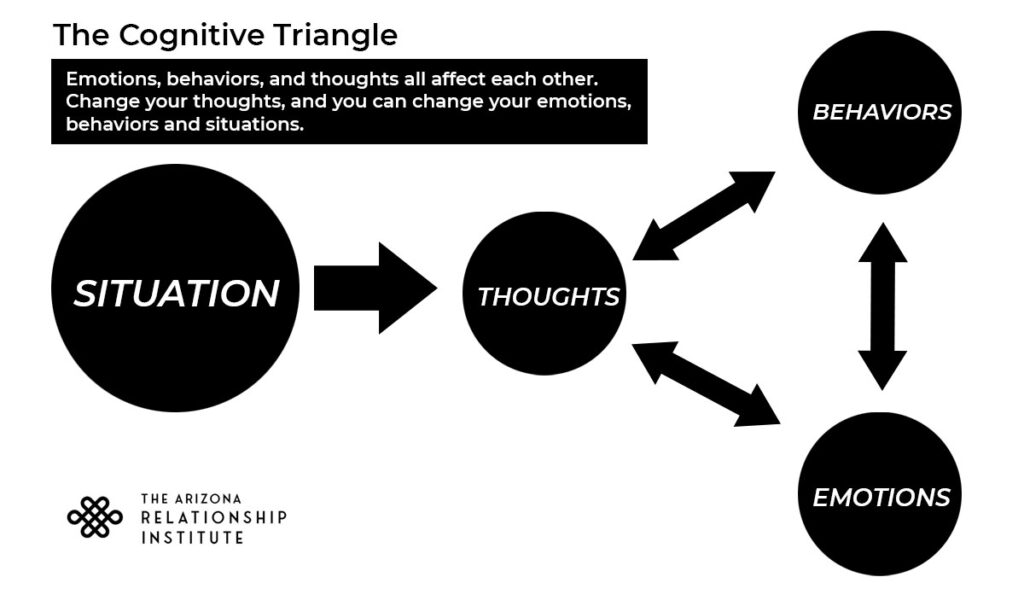
Why do we act the way we act, behave the way we behave, and do the things we do? CBT teaches you how to see the connections between your thoughts, feelings, emotions and behaviors. Once you are aware (cognitive) of your thoughts, emotions and behaviors, you can better control or change them.
Cognitive Behavioral Therapy (CBT) is a form of psychotherapy that helps you to become aware of your own negative thoughts, emotions or behaviors. These negative thoughts, emotions and behaviors are the culprits behind many negative mental health aspects in life. Once identified, these root causes of depression, traumatic stress, and other mental issues can be reversed into positive thoughts, behaviors and actions.
What is an Example of Cognitive Behavioral Therapy (CBT)?
CBT for Chronic Depression
An example of how Cognitive Behavioral Therapy (CBT) works is the example of how CBT helps depression. CBT talk therapy helps you to identify the negative thoughts and emotions that bring-on an attack of severe or chronic depression. Before you let your thoughts about negative self-worth worsen the depression, you and your therapist recognize this trigger for mental health concerns. These negative thoughts about yourself can either be stopped at this point, or if allowed to continue they will begin to negatively affect your emotions and ultimately your behaviors.
Intervening on your thoughts, emotions and behaviors is first done by the therapist, until you learn the skills to identify the negatives that can worsen depression and stop them from progressing all by yourself. That is the ultimate goal of CBT Therapy.
The Cognitive Triangle of Cognitive Behavioral Therapy (CBT)
Integrated treatment employs 1+ or a team of treatment providers to treat 2 or more conditions that are affecting an individual. Treating the physical symptoms of your concerns at the same time as your mental symptoms leads to faster diagnoses and more efficient holistic treatment.
What Can Cognitive Behavioral Therapy (CBT) Help With?
ADHD
Substance Abuse
Alcoholism and Binge Drinking
Quitting Smoking / Tobacco Cessation
Improving Self Esteem & Self Image
Eating Disorder Recovery
Speech Disorders, Stuttering, Ticks, and Speech Impediments
Chronic Pain Management without Medication
Couples Therapy
Family Therapy
Individual Therapy
Group Therapy
Sex Therapy
Marriage Therapy
Trauma Therapy
PTSD Therapy
More…
CBT For Depression: How Cognitive Behavioral Therapy Can Help Clinical Depression
Cognitive Behavioral Therapy (CBT) has been applauded for its success in treating a range of health issues in recent years. CBT has been used a treatment for depression, anxiety, and even substance use disorders and addiction. What is it about CBT that helps therapists and individuals sort out a range of complex issues? There are several points to consider…