
Discounted & Affordable Therapy Options | Learn More About Our Associate Therapists Program >>

What Anxiety Feels Like: Signs in Your Body, Thoughts, and Emotions

A day with anxiety: how it can quietly shape your routine

In daily life, what anxiety feels like can start off quietly and then build. You might wake up already tense, as if your mind got a head start. Getting dressed or making breakfast can feel hurried, even when there’s no real rush. On the way to work or school, you may replay conversations, worry about mistakes, or scan for problems that haven’t happened.

As the day goes on, anxiety can sit in the background as fight-or-flight: a tight chest, a jumpy stomach, sweaty hands, or a fast heartbeat–common physical anxiety symptoms and signs of anxiety in the body. Your attention may keep darting around, with racing thoughts anxiety that makes simple tasks feel harder than usual. You might over-prepare, double-check everything, or aim for perfection because it feels like the safest option.

Social plans and errands can bring emotional anxiety symptoms like irritability, embarrassment, or a sudden urge to cancel. Some people feel a steady current of worry; others get sharp waves of fear that fade and then come back. Avoidance can look like “I’ll do it later,” even when you genuinely care.

At night, your body may be tired but your mind won’t settle. Daily anxiety signs can show up even when life looks “fine” from the outside. Anxiety is a normal stress response, but it becomes a problem when it’s intense, frequent, or starts getting in the way of living.

Anxiety in the body: common physical signs (and why they happen)

One of the clearest parts of what anxiety feels like is how strongly it can land in your body. Anxiety can flip on your “fight-or-flight” system–your built-in alarm that prepares you to handle danger. Your brain and body release stress hormones that help you react quickly. The hard part is that this system can switch on even when the threat isn’t immediate (like a tough conversation, an overdue bill, or a crowded store). That’s why anxiety in the body can feel intense even when you can’t point to one clear cause.

Common physical anxiety symptoms include:

  • Fast heartbeat or pounding pulse
  • Tight chest or chest pressure
  • Shortness of breath or feeling like you can’t get a full breath
  • Sweating, shaking, or trembling
  • Nausea, stomach upset, diarrhea, or constipation
  • Dizziness or feeling lightheaded
  • Headaches
  • Muscle tension, sore shoulders/neck, jaw clenching, or teeth grinding
  • Fatigue (your body is “revved up,” then wiped out)

Sleep and appetite can shift too. You might struggle to fall asleep, wake up early with your mind already racing, lose your appetite, or swing the other way and eat more for comfort.

Some sensations can feel alarming but are often anxiety-related: tingling in your hands or face, hot flashes, a “lump in your throat,” or a constant keyed-up, on-edge feeling.

Because medical issues can mimic anxiety (and anxiety can make medical symptoms feel worse), it’s wise to check in with a clinician if symptoms are new, severe, getting worse, or feel concerning–especially chest pain, fainting, or trouble breathing.

Racing thoughts and worry loops: what anxiety sounds like in your mind

Another big part of what anxiety feels like is what happens in your head. With racing thoughts anxiety, your mind may leap to the next problem before you’ve finished the one in front of you. You might replay a conversation and cringe at something you said, or picture worst-case outcomes: “What if I get fired?” “What if they’re mad at me?” “What if something is wrong with my health?”

Worry can also get stuck on repeat. Rumination is when you think about the same issue over and over, but you don’t feel any closer to a solution–just more tense. These daily anxiety signs can be draining, especially when your brain treats the worry like an emergency.

Common thinking patterns include:

  • “What if” questions: your mind scans for possible threats, even unlikely ones.
  • Catastrophizing: assuming the worst will happen or that you won’t be able to handle it.
  • Mind-reading: guessing what others think (“They think I’m awkward”) without real evidence.
  • All-or-nothing thinking: seeing things as total success or total failure, with no middle ground.

Anxiety can also affect focus. When your brain is on alert, it may be harder to concentrate, follow a book or meeting, or remember small details. You might feel mentally “foggy,” or notice memory slips because so much energy is going into scanning for danger.

To feel safer, people often look for reassurance or check things repeatedly–refreshing texts or email, rereading messages, checking locks, or monitoring body sensations. These habits can bring short relief, but the thoughts often return, feeling convincing even when you know they aren’t fully realistic.

Emotional signs: fear, irritability, numbness, and everything in between

When people ask what anxiety feels like, they often describe a surge of worry, fear, dread, panic, or a vague unease that won’t fully lift. These emotional anxiety symptoms can shift throughout the day. You might feel okay in the morning, then suddenly get hit with a “something’s wrong” feeling after a meeting, a news alert, or even no clear trigger.

Anxiety can also come out as irritability or anger. You may feel snappy, short-tempered, or overwhelmed by small problems–like a slow driver, a messy kitchen, or a question from a coworker. This isn’t a character flaw; it’s often your nervous system running hot and trying to protect you.

Another common sign is restlessness. Even during downtime, you might feel unable to relax, impatient, or like you have to stay busy. You may sit down to watch a show but keep checking your phone, getting up, or thinking about what you “should” be doing. These are everyday daily anxiety signs that can be easy to overlook.

Many people also feel shame or harsh self-criticism about being anxious, along with a fear of being judged. And sometimes anxiety doesn’t feel like fear at all–it can feel like numbness or detachment. When you’re overwhelmed, your mind may “shut down” feelings as a protective response, leaving you feeling flat or disconnected.

How anxiety affects behavior and relationships

Anxiety doesn’t just live in your thoughts or body. It can also shape what you do and how you connect with people. Spotting these patterns can help you understand what anxiety feels like in daily life–without blaming yourself.

  • Avoidance: You might skip events, delay phone calls, or put off tasks. Avoidance can bring quick relief, but it often teaches your brain that the situation is “dangerous,” so anxiety grows over time.
  • Over-control and over-preparing: Anxiety can look like perfectionism, excessive planning, or checking and rechecking. You may struggle to delegate because it feels safer to handle everything yourself.
  • People-pleasing and conflict avoidance: You might say yes when you want to say no, soften your opinions, or avoid hard conversations. This can protect you from discomfort in the moment, but it can also lead to resentment or burnout.
  • Reassurance seeking: Asking “Are you mad?” or “Did I do that right?” can calm your nervous system briefly. Over time, though, frequent reassurance can strain relationships and make you feel more dependent on others to feel okay.

Anxiety can also affect intimacy and connection. You may feel distracted, guarded, or worried about being a burden, even with people you trust. At work and in daily functioning, anxiety may lead to procrastination, overworking, or getting stuck on decisions. These are common daily anxiety signs, and they often show up alongside physical anxiety symptoms and emotional anxiety symptoms.

When anxiety spikes: panic symptoms, triggers, and the “false alarm” feeling

Sometimes what anxiety feels like isn’t a steady hum–it’s a sudden spike. It can hit fast, like a jolt of fear out of nowhere. You might feel an urgent need to escape, call someone, or stop what you’re doing immediately. Many people describe feeling out of control, even if part of them knows they’re “probably fine.”

During a panic episode (often called a panic attack), physical anxiety symptoms can be intense. Common signs include:

  • Pounding heart, chest tightness, or chest pressure
  • Trembling or shaking
  • Shortness of breath or feeling like you can’t get a full breath
  • Nausea or stomach upset
  • Dizziness or feeling faint
  • Chills, sweating, or sudden heat
  • Fear of dying, passing out, or “going crazy”

One helpful way to understand this is the “false alarm” idea: your alarm system turns on as if danger is present, even when you’re actually safe. This is anxiety in the body doing its job too well–not proof that something terrible is about to happen.

Triggers can be external (crowds, conflict, deadlines) or internal (body sensations, memories, caffeine, lack of sleep). Early warning signs may include muscle tension, shallow breathing, irritability, more checking/reassurance seeking, trouble focusing, or racing thoughts anxiety. Noticing these daily anxiety signs can help you step in sooner.

Safety note: If you have chest pain, severe shortness of breath, fainting, or symptoms that could be a medical emergency, seek urgent medical care right away.

Coping tools you can use today (body, thoughts, and emotions)

The most helpful tools usually match what anxiety feels like in the moment. If your body is revved up, start with your body. If your mind is spinning, try a thought tool. If emotions feel big or numb, focus on feelings and connection. Small steps, repeated often, can add up.

Body-based tools (for anxiety in the body)

  • Slow your breathing with a longer exhale: Inhale through your nose for 3-4 seconds, then exhale for 5-7 seconds. Do 5-10 breaths. Stop if you feel dizzy or lightheaded; return to normal breathing.
  • Grounding with the five senses: Name 5 things you see, 4 you feel, 3 you hear, 2 you smell, and 1 you taste. This can interrupt the alarm feeling.

If slow breathing makes you feel worse or more panicky, switch to grounding with your senses or gentle movement. If focusing inward feels too intense, try looking around the room and naming objects instead.

  • Progressive muscle relaxation: Gently tense and release muscle groups (hands, shoulders, jaw, legs), noticing the “release” part.
  • Stretch or walk for 5-10 minutes: Movement helps burn off stress energy and can ease physical anxiety symptoms.
  • Support your system: Reduce caffeine, drink water, and aim for regular meals to avoid blood sugar dips that can mimic anxiety.

Thought tools (for racing thoughts anxiety)

  • Name the worry: “This is my health worry” or “This is my work worry.”
  • Write it down: Get it out of your head and onto paper.
  • Set a “worry window”: Pick 10-15 minutes later in the day to worry on purpose. When worries pop up earlier, remind yourself, “Not now–later.”
  • Ask: “What’s the most likely outcome?” (not the worst one).
  • Use realistic, kind self-talk: “This feels hard, but I can take one step.”

Emotion and behavior tools (for daily anxiety signs)

  • Label the feeling: “I’m anxious,” “I’m irritated,” or “I feel numb.”
  • Let it rise and fall: Feelings are like waves; they change even if they’re intense.
  • Do one calming activity: Music, a warm shower, a brief tidy, or a few minutes outside can lower emotional anxiety symptoms.
  • Connect: Text or call a trusted person and say what you need (“Can you listen for 5 minutes?”).
  • Make tasks tiny: Choose the smallest next step, use a timer (5-15 minutes), then reassess.
  • Plan gentle exposure instead of avoidance: Approach the thing in a manageable way, little by little.
  • Set boundaries: Limit extra commitments, and protect recovery time.
  • Sleep basics: Keep a consistent wake time, build a short wind-down routine, and limit doomscrolling before bed.

Knowing when to get extra help–and what support can look like

If anxiety is showing up most days, you’re avoiding important parts of life, having frequent panic, sleeping poorly, using alcohol or drugs more, feeling hopeless, or your symptoms have lasted weeks to months, it may be time for extra support.

  • Therapy (like CBT)
  • Skills groups to practice coping tools with others
  • Medication options through a prescriber
  • Coaching or support groups
  • Workplace accommodations (like flexible scheduling or quieter space)

What to expect: CBT (cognitive behavioral therapy) helps you notice unhelpful thoughts and avoidance patterns, then practice new skills in real life–often with simple “homework.” Many people feel progress over weeks to months. If you try medication, it’s usually a trial-and-adjust process with a prescriber, and you can ask about side effects and any concerns.

To start, talk with your primary care provider, use an employee assistance program, or search a therapist directory. You can also ask about sliding-scale fees. If you might hurt yourself or feel unsafe, call or text 988 in the U.S., or contact local emergency services. You’re not alone–anxiety is treatable, and small steps add up.

Key takeaways

  • Anxiety can affect everyday routines, choices, and relationships.
  • It can show up in your body, thoughts, and emotions–often at the same time.
  • Panic can feel like a “false alarm,” even when you’re actually safe.
  • Go-to tools: longer exhales, five-senses grounding, and naming the worry.
  • If symptoms are persistent or limiting, getting extra help is a strong next step.
  • Noticing patterns can help you understand what anxiety feels like and respond sooner.

Overwhelmed Mom Support: Steps to Ease Motherhood Burnout and Ask for Help

When Your Brain Never Gets to Rest: Naming the Mental Load

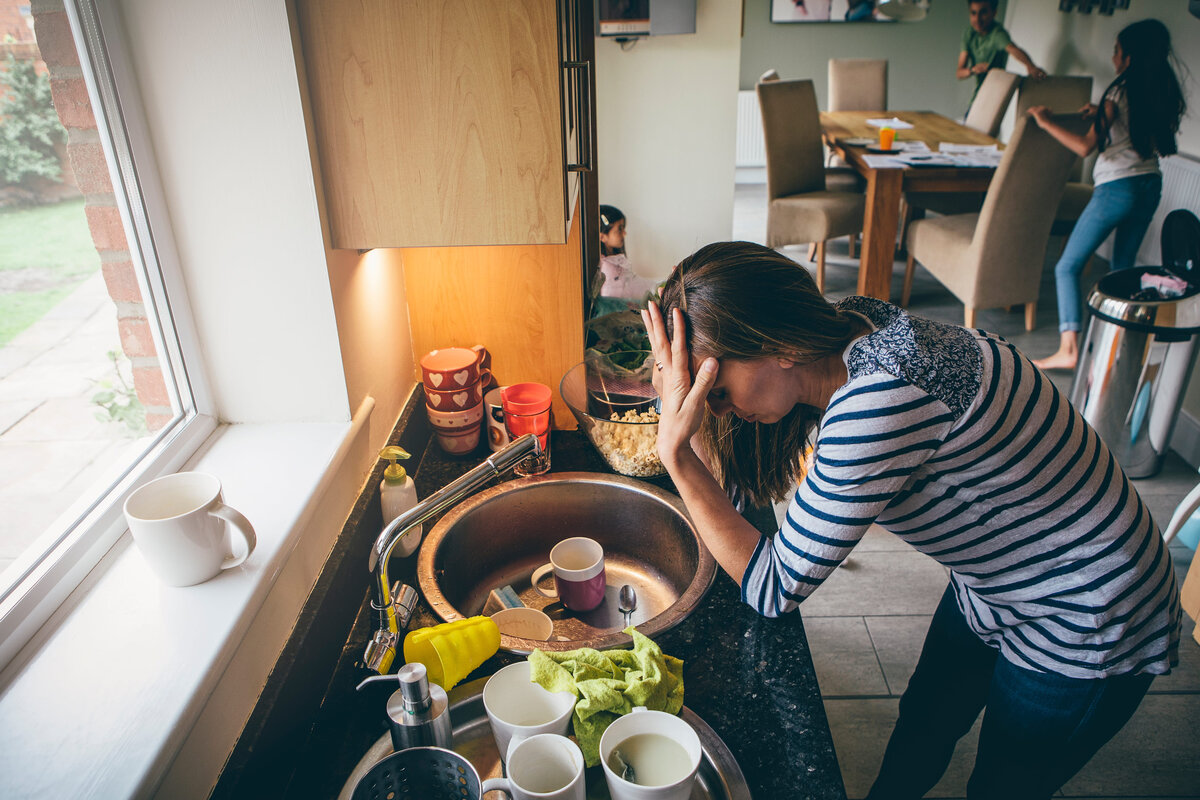
If you feel like your mind is always “on,” you’re not imagining it. Even when you finally sit down, your brain may keep running a quiet checklist: Who needs a refill on allergy meds? Did I sign the field trip form? What’s for dinner, and do we have enough milk?

This is often called the maternal mental load. It’s not just doing chores. It’s the ongoing work of noticing needs, planning ahead, remembering details, and following up until things are actually done. It can feel like being the “project manager” of family life, whether or not anyone officially handed you that role. Some common

  • Scheduling doctor, dentist, and therapy appointments
  • Tracking school emails, forms, and spirit days
  • Meal planning, grocery lists, and keeping snacks on hand
  • Noticing when kids outgrow shoes or need a new coat
  • Remembering birthdays, gifts, and thank-you notes
  • Managing supplies like diapers, shampoo, and cleaning products

A big part of the burden is that this work is often invisible. The invisible labor mothers do–anticipating problems before they happen–can be hard for others to notice. When it goes unseen, you may feel alone, unappreciated, or like you have to “prove” how much you’re doing.

Mothers carrying the mental load can happen in any family setup: married, single, co-parenting, blended families, or multigenerational homes. This isn’t about blaming a partner or family member. It’s about putting words to what’s happening so you can ask for shared household responsibility and real overwhelmed mom support. When the pressure never lets up, it can lead to chronic stress, resentment, and less time to rest.

Maternal Mental Load vs. Chores: Why It Feels So Heavy

Chores are the visible tasks: dishes, laundry, bedtime. The maternal mental load is the “manager” role behind those tasks. It’s the constant work of anticipating problems, making decisions, and coordinating people–often while also doing paid work and hands-on caregiving.

This load often grows over time. As families shift, the mental checklist tends to expand: more activities, school demands, work deadlines, aging parents, health needs, and social expectations like holidays and family events. Even “small” changes–new allergies, a shift at work, a child struggling in school–can add layers of tracking and follow-up that don’t fully shut off.

Some common patterns can make the load even heavier:

  • Perfectionism: feeling like it has to be done a certain way or it “doesn’t count.”
  • Fear of being judged: worrying others will think you’re failing if anything slips.
  • “It’s faster if I do it”: taking over to avoid delays, then getting stuck owning it forever.
  • Waiting to be told: others “helping” only after you assign tasks–so you’re still managing.

There’s also emotional labor: tracking everyone’s moods, preventing conflict, remembering what matters to each person, and keeping the peace. Real relief usually comes from shared household responsibility–not just pitching in, but one person fully owning a task from start to finish (plan, do, and follow up). That way, the thinking and remembering aren’t all on you.

Signs You’re Sliding Into Motherhood Burnout

Motherhood burnout isn’t a character flaw or proof you’re “bad at this.” It can happen when the stress of constant responsibility goes on for too long–especially for Mothers carrying the mental load. Support like motherhood burnout therapy can help you sort out what’s on your plate, lower the pressure, and build a plan for real relief–not “try harder.”

Burnout can show up in your mood, body, and thinking. Common signs include:

  • Irritability or snapping at your partner or kids, then feeling guilty
  • Numbness, feeling checked out, or like you’re on autopilot
  • Frequent tears or feeling “one small thing” away from breaking
  • Feeling trapped, resentful, or like there’s no exit ramp
  • Sleep problems (can’t fall asleep, can’t stay asleep, never feel rested)
  • Headaches or stomach issues, tight shoulders, or getting sick more often
  • Brain fog, trouble focusing, or forgetting basic things

You might also notice behavior changes: withdrawing from people, doom-scrolling late at night, overworking to “catch up,” avoiding texts and calls, losing interest in hobbies, or missing appointments and school details. These are often signs your system is overloaded–not that you don’t care.

Relationships can be a clue, too. The maternal mental load and other invisible labor mothers do can create resentment, especially if you feel like a “single parent” in a partnered home. Frequent arguments about chores, schedules, or money often point to a need for clearer roles and more overwhelmed mom support.

Safety note: If you’re thinking about harming yourself or someone else, or you don’t feel safe, get urgent help. In the U.S., call or text 988, go to the ER, or reach out to a trusted person right now.

Quick Relief: Small Changes That Lower the Load This Week

When you’re overwhelmed, big fixes can feel out of reach. These small steps can create breathing room quickly and build momentum for bigger changes later.

1) Do a “mental load dump” (10 minutes)

Open a notes app or grab paper. Write down every task looping in your head–appointments, school emails, groceries, birthday gifts, permission slips, “ask the pediatrician,” all of it. This gets the maternal mental load out of your brain and onto something you can actually see.

  • Circle the top 3 that truly matter this week.
  • Everything else becomes “later,” “nice to do,” or “ask someone else.”

2) Use the “good enough” rule in one area

Pick one place to lower your standards on purpose. This isn’t giving up. It’s deciding what matters most right now–and what can wait.

  • Meals: repeat easy dinners, do breakfast-for-dinner, or keep it simple with sandwiches.
  • House: focus on health and safety (trash, dishes, laundry basics) and let the rest slide.
  • Activities: say no to one extra thing this week.

3) Create a 10-minute daily reset

At the same time each day (often after dinner or before bed), do a quick reset:

  • Look at tomorrow’s schedule.
  • Set 1-2 reminders for time-sensitive items.
  • Choose one priority for tomorrow (not ten).

4) Batch and automate what you can

  • Keep a running grocery list and add items as you notice them.
  • Auto-ship basics (toilet paper, diapers, pet food) if it’s affordable.
  • Use a shared calendar for school events, practices, and appointments.
  • Set bills to autopay when possible.
  • Create a simple meal rotation (like 6-10 go-to meals).

5) Build micro-rest (5-15 minutes)

Your brain needs real breaks, not “rest” that quietly turns into more chores. Try quiet breathing, a short walk, stretching, a shower, or one song with your eyes closed. It may feel small, but it helps your body come down from constant alert.

Asking for Help Without Guilt: Scripts and Boundaries That Work

Needing help isn’t a personal failure. When you’re overloaded, it’s often a family system problem, not a “you problem.” Many mothers carrying the mental load wait until they’re at a breaking point because they don’t want to seem needy or controlling. You deserve support earlier–before stress turns into resentment or shutdown.

One of the fastest ways to get real relief is to ask for ownership, not just “help.” Ownership means one person handles a task from planning to follow-through, without you managing reminders. Compare:

  • Vague: “Can you help more?”
  • Specific with ownership: “Can you handle school lunches from planning to packing every weekday?”

Simple scripts

  • Partner/co-parent: “I’m carrying too much of the planning. Starting this week, I need you to fully own bedtime: pajamas, teeth, and lights out.”
  • Relative: “We could use support. Could you take the kids every Saturday from 10-1 so I can rest and reset?”
  • Friend: “I’m stretched thin. Can you drop off a ready-to-eat meal on Tuesday, or do a grocery run if I send a list?”
  • Text message: “I’m overloaded and need consistent support. Can you own [task] from start to finish this week? Pick A) Mon/Wed/Fri or B) Tue/Thu.”

Boundaries that protect your energy

  • Protected rest time: “From 8-9 p.m., I’m off duty unless it’s urgent.”
  • No last-minute volunteering: “If it’s not on the calendar 48 hours ahead of time, I’m not committing.”
  • Limits on emotional caretaking: “I can listen for 10 minutes, then I need a break.”

If you get pushback, it can help to stay steady and repeat the request. Name the impact and offer choices: “When I’m the only one tracking things, I burn out. Which do you prefer–lunches or laundry?” Try to avoid long explanations. Fair doesn’t always mean equal; aim for shared household responsibility based on time, energy, and skills. A short weekly check-in (10 minutes) can help keep the mental load from quietly sliding back onto you.

How Therapy Can Help Mothers Carrying the Mental Load

When you’re overloaded, it can feel like there’s nowhere to set anything down. Therapy can give you a private, steady place to unload what you’re carrying–without being judged or told to “just be grateful.” For Mothers carrying the mental load, that alone can be a relief: you get to say the quiet parts out loud, sort what’s urgent versus optional, and name the invisible labor mothers do every day.

In everyday terms, therapy can help you:

  • Lower guilt and self-blame (“I should be able to handle this”) and replace it with more realistic expectations.
  • Build coping skills for anxiety, anger, and overwhelm–especially when you’re running on low sleep.
  • Practice communication so you can ask for shared household responsibility without a blow-up or shutdown.
  • Reconnect with yourself beyond caregiving, so you’re not only “mom.”

Common approaches you might hear about include:

  • CBT (Cognitive Behavioral Therapy): helps you notice unhelpful thought loops (like “If I don’t do it, it won’t get done”) and try more balanced, workable thinking.
  • ACT (Acceptance and Commitment Therapy): helps you make room for hard feelings while still taking steps based on your values (like health, connection, or fairness).
  • Couples therapy: focuses on teamwork, conflict patterns, and creating systems so the mental load doesn’t default to one person.

Many people start therapy with goals like improving sleep, reducing panic or irritability, building sustainable household systems, and creating “good enough” standards that reduce stress.

To find support, you can try your insurance directory, community mental health clinics, employee assistance programs (EAP), postpartum support organizations, or teletherapy if leaving home is hard. When you reach out, consider asking: “Do you work with parenting stress and burnout? Relationship dynamics? Cultural or family expectations? Do you offer evening sessions or short-term focused work?”

If therapy isn’t accessible right now, you still deserve support. Support groups, parenting groups, coaching, trusted friend check-ins, or self-guided workbooks can help. Consider seeking professional care sooner if you have panic attacks, can’t sleep for days, feel numb or hopeless, or your anger feels out of control.

A Sustainable Plan: Sharing the Work and Protecting Your Well-Being

Real relief usually comes from a system, not a one-time “big talk.” For mothers carrying the mental load, the goal is to move planning out of your head and into shared tools everyone can see and use.

  • Create one shared system: use one family calendar (digital or paper), a visible task list, and clear owners for recurring responsibilities (like laundry, lunches, bills, bedtime, and appointments).
  • Use the “own it end-to-end” rule: if someone owns a task, they handle planning, supplies, and follow-through–without you reminding.
  • Hold a weekly check-in (10-15 minutes): review the week, name busy days, adjust tasks, and prevent resentment from building.

Protect the basics–sleep, food, movement, medical care, and one small personal outlet–as non-optional maintenance, not a reward you earn after everything is done.

Change can be gradual. Even one task handed off fully is progress. In the next 24 hours, choose one quick relief step (a list, a calendar update, or a daily reset) and make one clear help request that includes end-to-end ownership.

Parenting an Anxious Child: What to Say, What to Do, and When to Get Extra Help

When Worry Takes Over: Understanding Anxiety in Kids

Parenting an Anxious Child can feel scary and lonely, even though anxiety is very common in kids. It can show up in loving, stable homes, too. Anxiety isn’t proof you’ve done something wrong. It’s often a mix of temperament (how a child is wired), stress, life changes, school pressure, and a brain and body that are still learning how to handle big feelings.

All kids worry sometimes. Typical worry comes and goes and usually doesn’t stop them from doing most everyday things. Anxiety is different: the fear feels out of proportion, sticks around, and starts getting in the way. You might see more tears, more arguments, or more “I can’t” moments–especially around school, sleep, or separation. This is common with school-related anxiety – anxiety children experience when tests, friendships, or performance start to feel like too much.

Anxiety doesn’t always look like fear. For many kids, it shows up as:

  • Irritability or sudden anger
  • Clinginess or trouble separating
  • Perfectionism (“If I can’t do it perfectly, I won’t do it.”)
  • Avoidance (stalling, refusing, “forgetting”)
  • “Acting out” that’s really stress spilling over

One kid-friendly way to explain anxiety is to talk about the body’s “alarm system.” Sometimes that alarm goes off when there’s no real danger–like a smoke detector that’s too sensitive. Their body may jump into fight, flight, or freeze.

Strong support for an anxious child starts with calm, steady adults. When parenting anxious kids, predictable routines, spending less time stuck in reassurance and anxiety loops, and practicing simple child coping skills can help kids feel safer and more capable over time.

Signs to Watch For: Emotional, Physical, and Behavior Clues

Anxiety can look different from one child to the next, and it can shift as they grow. The goal isn’t to treat every worry like a crisis. It’s to notice patterns–especially when fear starts running the show in choices, sleep, school, or friendships.

Emotional clues

  • Frequent reassurance-seeking (“Are you sure?” “What if…?”) that comes back quickly after you answer
  • Fear of mistakes, perfectionism, or intense guilt after small errors
  • Big worries about safety (getting sick, something bad happening, disasters)
  • Social fears (being judged, embarrassed, left out)

Physical clues

  • Stomachaches, headaches, nausea, or “I don’t feel good” before school or events
  • Fast heartbeat, shaky feelings, sweating, or shortness of breath
  • Trouble falling asleep, nightmares, or waking often
  • Appetite changes (eating much less or more)

Behavior clues

  • Avoidance: refusing, stalling, or “forgetting” tasks or activities
  • Tears or tantrums at transitions (bedtime, drop-off, leaving the house)
  • Refusing to go to school, or frequent visits to the nurse
  • Constant checking (locks, homework, texts) or lots of procrastination

Common triggers include separation (often younger kids), social situations (often older kids), tests and performance, and health worries. Some kids keep their anxiety hidden by getting very quiet or by overachieving.

If you’re not sure what’s driving it, track a few episodes: what happened beforehand, what your child did, what helped, and what made it worse. Seeing the pattern often makes the next step easier to choose.

What to Say in the Moment: Reassurance That Helps (and What Can Backfire)

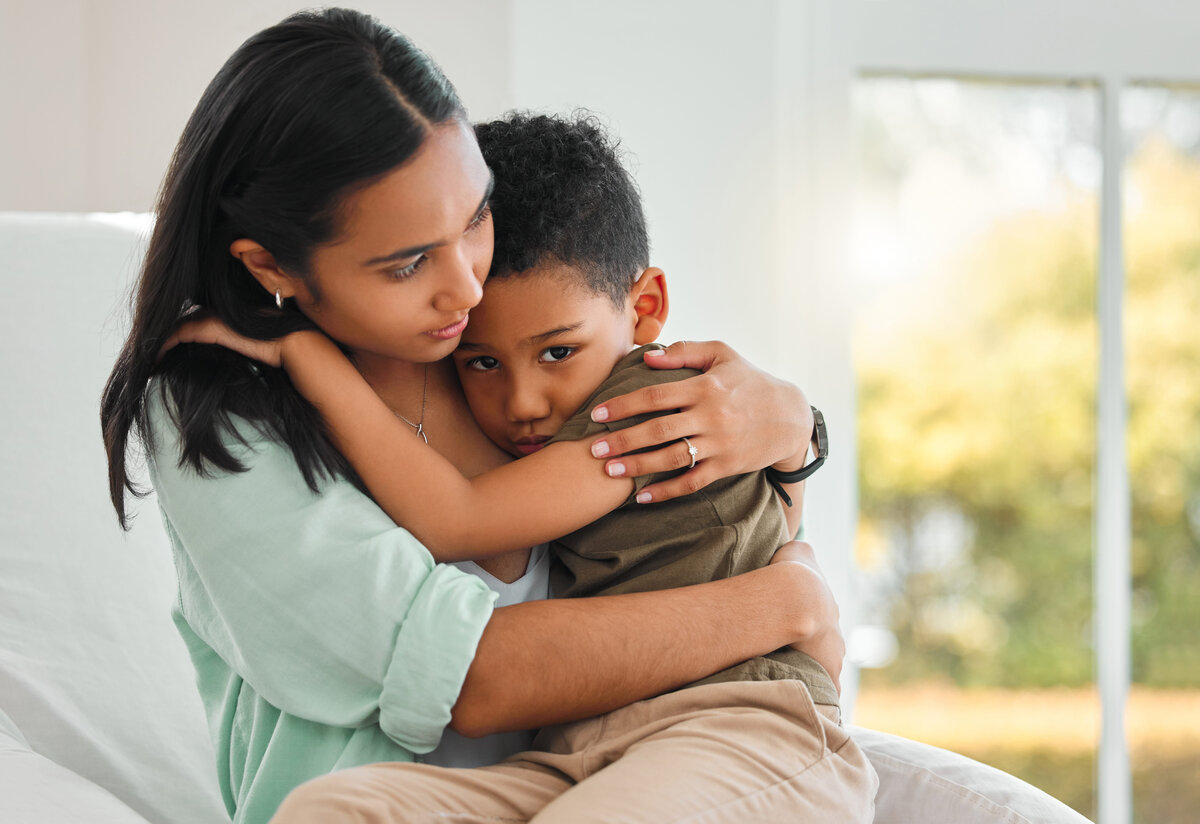
When your child is panicking, start with validation. That means naming what you see and showing you’re with them, even if you don’t agree with the fear. Try: “I see you’re really scared,” or “This feels big.” Then add connection: “I’m here. We can handle this together.”

  • “I believe you. Your body feels really alarmed right now.”
  • “This feels big, and you’re not alone.”
  • “We can handle this together. Let’s take one step.”
  • “It makes sense you’re worried. What’s the next tiny thing we can do?”

Many parents (for good reason) reach for: “You’re fine,” “Stop worrying,” or “There’s nothing to be scared of.” The catch is that repeated reassurance can turn into a loop: your child feels anxious, asks for certainty, feels better for a moment, then the worry returns and they ask again. Over time, their brain can start learning, “I can’t cope unless someone proves I’m safe.” That’s one way reassurance and anxiety get tangled.

Instead, try limited reassurance plus a plan. Answer once in a calm, simple way, then shift to coping or problem-solving:

  • Answer once: “Yes, I’ll be here at 3:00 after school.”
  • Name the pattern: “I notice your worry wants to ask again.”
  • Move to a tool: “Let’s do three slow breaths, then we’ll pack your bag.”

Avoid common traps: debating fears (“That’s not logical”), overpromising (“Nothing bad will happen”), rushing (“Hurry up, you’re late”), or shaming (“You’re being dramatic”). When Parenting an Anxious Child, your calm matters as much as your words. Keep your voice low, shoulders relaxed, and movements steady–kids often “borrow” the adult’s nervous system.

Teach self-talk your child can practice: “My worry is loud, but I can still do hard things.” This builds long-term confidence and supports the child coping skills that help with everything from bedtime to the school anxiety children may face.

What to Do Day-to-Day: Routines, Boundaries, and Building Confidence

Daily life can either lower your child’s background stress or keep their alarm system on high. Often, simple routines and steady limits do more than one big talk.

Build predictable rhythms. Aim for regular sleep, meals, homework time, and smoother transitions (like a 10-minute warning before leaving). When kids know what’s coming, there are fewer surprises–and fewer surprises means fewer spikes in anxiety. A short visual schedule or checklist can also help during busy mornings.

Set kind, clear boundaries. Anxiety is real, but it doesn’t get to make all the rules. Try: “I know your worry is loud. The plan is still school. I’ll help you take the next step.” This kind of support for your anxious child protects family life while staying compassionate.

Coach, don’t rescue. Avoiding scary things makes anxiety grow. Instead, help your child face small challenges in tiny steps: walk into the classroom together, then try the doorway, then a quick goodbye. This is a core skill in parenting anxious kids.

Praise bravery and effort: “You tried even though you felt nervous,” and “You stuck with it.”

Create a worry plan: a 10-minute daily “worry time,” a worry notebook, or a worry box.

Limit amplifiers: too much news, scary videos, and caffeine/energy drinks for older kids.

Choose steady family habits: movement, outdoor time, connection, and realistic expectations.

Over time, routines and teaching coping skills can reduce the need for constant checking and loosen reassurance and anxiety loops by building real confidence.

Child Coping Skills That Work Best: Tools to Practice When They’re Calm

These skills work best when you practice them during calm moments–not only in the middle of a meltdown. Coping is like learning to ride a bike: short, repeated practice helps your child’s body remember what to do when anxiety spikes.

Breathing tools (simple and fast)

  • “Smell the flower, blow the candle.” Breathe in through the nose (smell), then blow out slowly like a candle. A longer exhale helps the body shift into calm mode.
  • Box breathing. Inhale 4, hold 4, exhale 4, hold 4. Trace a square with a finger while you count.
  • Longer exhale. In for 3, out for 5 (or in for 4, out for 6). Keep it gentle, not forced.

Body-based skills (move anxiety out of the body)

  • Progressive muscle relaxation. Tighten a muscle group (hands, shoulders, legs) for 5 seconds, then release.
  • Stretching or a wall push. Push hands into a wall for 10 seconds, release, repeat. It gives the body “work” to do.
  • Five-senses grounding. Name 5 things you see, 4 you feel, 3 you hear, 2 you smell, 1 you taste.

Thought skills (talk back to “what-if”)

  • Spot “what-if” thoughts. “What if I throw up at school?” is a worry story, not a fact.
  • Name the worry. “That’s my worry voice.” Naming creates a little space.
  • Choose a more balanced thought. “I might feel nervous, and I can handle it. I can ask for help.”

Try coping cards your child can keep in a backpack: “I can do hard things,” “Feelings are not facts,” “One step at a time.” For problem situations, teach a simple process: define the problem, brainstorm options, pick one, try it, review.

You can also create a calm-down kit: a fidget, drawing supplies, a music playlist, a comforting scent, a small snack, and water. Then make a practice plan: 3-5 minutes daily (after school or before bed) so these tools are ready when stress hits.

School Stress and School Anxiety in Children: Working With Teachers Without Blame

Many kids who seem “fine” at home struggle at school. Common school anxiety children face includes separation at drop-off, test pressure, presentations, social worries (who to sit with, being judged), bullying, and perfectionism. It helps to treat school anxiety as a problem you can work on–not a character flaw.

Make mornings easier. Anxiety often spikes when kids feel rushed. Try packing backpacks and laying out clothes the night before, using a simple checklist, waking up 10-15 minutes earlier, and building in 5 minutes of calm connection (a cuddle, a short chat, a song) before you head out.

Create a drop-off plan. Long goodbyes can accidentally feed worry. Use a brief goodbye, a consistent script (“I love you. You’re safe. I’ll see you at 3:00.”), and a predictable handoff routine (walk to the same spot, high-five, then the teacher takes over). Avoid repeated returns to the classroom, even if your child begs–this can keep a reassurance and anxiety cycle going.

Collaborate with the school. Ask for a meeting with the teacher or counselor. Share patterns you notice (days, subjects, transitions) and ask what they see. Agree on a simple plan for supporting your anxious child, such as:

  • a designated check-in person
  • a break pass (short, timed breaks)
  • seating changes or a “safe seat” near the door
  • reduced make-up work after absences

Build gradual exposure. With parenting anxious kids, aim for small steps toward attendance and participation: entering the building, staying for first period, answering one question, giving a short presentation to a teacher first. These steps build confidence through practice and reinforce child coping skills.

If anxiety is significantly affecting learning, attendance, or grades, ask about formal supports like a 504 plan or an IEP (school plans that can provide accommodations and services).

When Anxiety Gets Bigger: Red Flags and When to Get Extra Help

Most kids worry sometimes. But when anxiety starts taking over, extra support can make a real difference. Reaching out isn’t a failure in Parenting an Anxious Child–it’s a way to care for your child and your whole family.

Consider professional help if you notice:

  • Frequent school refusal or constant battles at drop-off (common with school anxiety children experience)
  • Panic symptoms (racing heart, shaking, shortness of breath, feeling “out of control”)
  • Major sleep problems (can’t fall asleep, frequent waking, or exhaustion)
  • Constant physical complaints (stomachaches, headaches), especially before school or activities
  • Severe avoidance (won’t go places, try new things, or be away from you)
  • Talk of self-harm or not wanting to be alive

Also look at duration and impact: anxiety most days for weeks, family life shrinking, or your child struggling with age-expected tasks (sleeping alone, attending school, playdates). If your family feels stuck in constant reassurance and anxiety loops, that’s another sign to get more support for your anxious child.

Where to start: your pediatrician, a school counselor, or a licensed therapist. Bring specific examples (what happens, how often, triggers, what helps).

What therapy may involve: CBT (cognitive behavioral therapy) helps kids notice worry thoughts and practice new responses. Exposure therapy means facing fears in small, planned steps so the brain learns, “I can handle this.” Many therapists also provide parent coaching, which can be especially helpful in parenting anxious kids while building child coping skills.

Medication: Sometimes medication is used, usually alongside therapy. Discuss risks and benefits with a qualified prescriber.

If you have any safety concerns (self-harm, threats, immediate danger), call 911, go to the ER, or contact a crisis line right away.

Putting It All Together: A Simple Plan for Parenting an Anxious Child

When Parenting an Anxious Child, it can help to think in three steps: connect (validate the feeling), coach (practice skills), and gently challenge (take small brave steps). Anxiety may not fade quickly, but your child can get better at moving through it.

  • One coping practice: 5 minutes of breathing, grounding, or coping cards (to build child coping skills).
  • One small exposure goal: a planned step toward what they avoid (a key part of parenting anxious kids).
  • One school check-in: a brief email or plan to support school anxiety children may face.
  • One family reset: a walk, a game, or a screen-free meal.

Expect setbacks. When they happen, go back to basics and try to avoid all-or-nothing thinking. For you, a 60-second breathing break can help, along with leaning on your support network and keeping consistent messages between caregivers. Progress often looks like showing up and recovering faster–not having zero worry. Many kids improve with steady anxious child support, less time spent in reassurance and anxiety loops, and extra help when it’s needed.