



When hard moments at home keep ending in raised voices, change is possible. You can learn to notice what sets you off, respond with steadier limits, and repair after conflict in ways that protect both connection and authority.
When Yelling Becomes a Pattern You Want to Change
Many caregivers raise their voices when stress is high, especially when they are tired, rushed, overstimulated, or dealing with repeated pushback. If this feels hard, you are not alone. Wanting to change this pattern is a meaningful first step.
For many families, the cycle feels familiar. A child does not listen, tension builds, a parent snaps, everyone feels unsettled, and guilt shows up later. That does not mean you are a bad parent. It may mean your system is overloaded and the tools you have right now are not working well enough in the moment.
No human being can be perfectly calm all the time. A more realistic goal is creating more pauses before reacting, clearer child behavior boundaries, and safer communication during conflict. Many people who want to parent without yelling are not trying to give up authority. They are trying to stay steady while still leading.
The question is simple, how do you get cooperation and set limits without shouting? Often, it starts with noticing parental anger triggers earlier, using brief emotional regulation for parents in the moment, choosing calm discipline strategies that fit the situation, and having repair conversations after conflict when things go off track. If yelling feels frequent, intense, or connected to past experiences, extra support from a licensed mental health professional may help.
What Tends to Set Parents Off
Parental anger triggers are the situations, thoughts, and body signals that make it easier to lose control. For many caregivers, it is not just one child behavior. It is a stack of stressors: fatigue, hunger, time pressure, sibling conflict, loud noise, feeling ignored, or getting embarrassed in public.
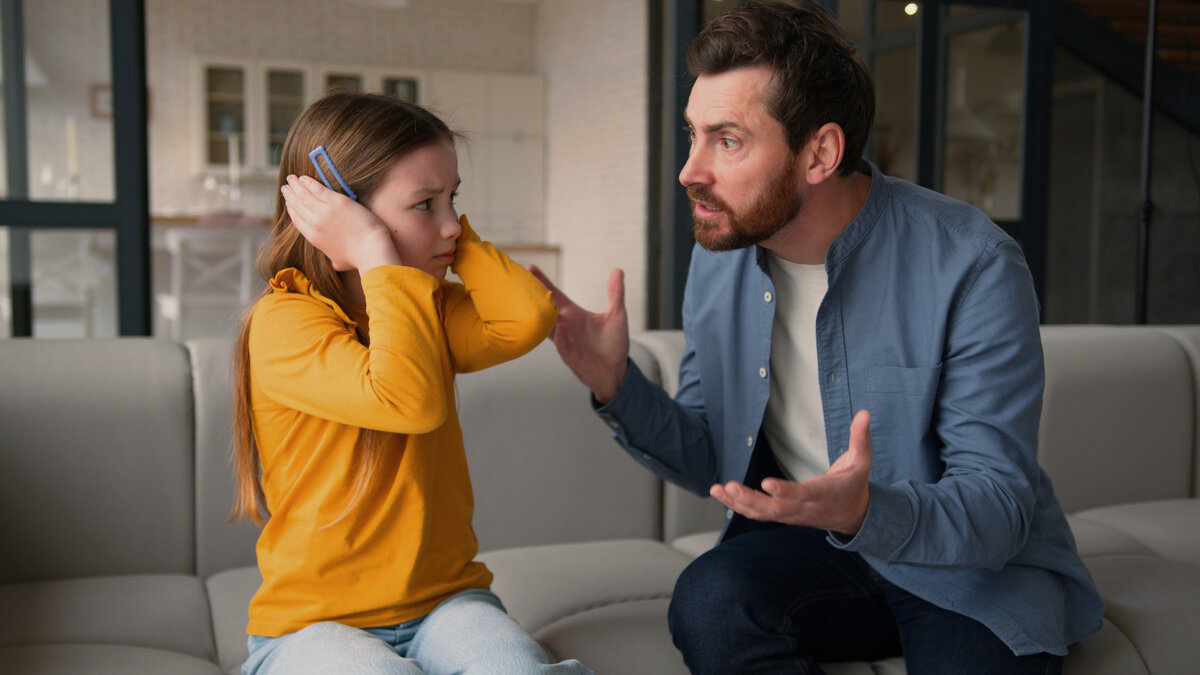
Sometimes a child’s behavior also touches older stress or painful memories. A slammed door, back talk, or being ignored can feel much bigger in the moment than it may look from the outside. This may mean your nervous system is reading the moment as urgent.
Early warning signs often show up before yelling starts. You might notice a tight jaw, heat in your chest, faster speech, a strong urge to lecture, or the feeling that you are cornered. Thoughts can become extreme very quickly, such as “They never listen” or “This is getting out of control.” Spotting these signs early can support emotional regulation for parents before conflict grows.
A Quick 3-Question Self-Check
- What is happening around me? Notice noise, time pressure, sibling conflict, or public stress.
- What is happening in my body? Look for clues like clenched teeth, shallow breathing, or a sharp tone.
- What do I need in the next 60 seconds to stay steady? It might be one slow breath, fewer words, a sip of water, or help from another adult.
A Simple Trigger Log
A short log can make patterns easier to spot. Write down the following: Situation | Body cues | Thoughts | What I did | What helped next time
Example: 7:45 a.m. school rush | shoulders tight, voice getting sharp | “We are going to be late again” | repeated threats | packing bags the night before helped.

How to Pause Before Your Voice Rises
These tools are meant to interrupt escalation, not erase emotion. You can be frustrated and still slow the moment down enough to choose your next sentence. Many people find that these tools take practice before they feel natural.
1) The 10-second Pause
When to use it: At the first sign that your tone is getting sharp.
- Stop talking.
- Put both feet on the floor.
- Lower your shoulders.
- Say, “I need a moment to answer calmly.”
- Return with one clear instruction.
Example: “I’m getting upset, so I’m going to pause and then tell you what needs to happen.”
2) Longer-Exhale Breathing
When to use it: During whining, arguing, or repeated interruptions.
- Inhale gently for a count of 3.
- Exhale for a count of 4 or 5.
- Repeat 3 times while looking at one fixed object.
- Speak after the third exhale.
If breathing exercises increase distress, stop and consider discussing that with a clinician.
3) A Safe Step-Away
When to use it: When you feel close to yelling and your child is safe and supervised.
- Make sure the child is safe.
- Say where you are going and when you will return.
- Step away briefly.
- Come back and give one calm direction.
Example: “I’m stepping into the hallway for one minute, then I’ll help you clean up.”
Do not walk away from very young children or from unsafe situations.
4) A One-Line Reset
When to use it: When your mind starts racing.
- Choose a short phrase ahead of time.
- Repeat it silently once.
- Pair it with one physical action, such as unclenching your hands.
- Then speak briefly.
Example: “Slow is steady.”
The goal is not to get rid of anger. It is to create enough space to respond with more choice.
Say Less, Mean More
Many children respond better to short, specific directions than to long lectures, especially when the adult sounds stressed. When words pile up, children often miss the main point or shift into arguing, freezing, or tuning out. If you want to parent without yelling, fewer words often create more cooperation.
It also helps to set expectations before a problem starts, especially for routines and public outings. A simple formula is:
“When I say ___, I need you to ___.” For example: “When I say it is time to leave the park, I need you to walk to the gate.”
How to Give a Clear Instruction
- Get close enough to be heard. Move near your child instead of calling from another room.
- Use the child’s name. This helps cue attention.
- Example: “Maya, shoes on now, then meet me at the door.”
- Give one action at a time. Break tasks into small steps.
- Example: “Pick up the blocks.”
- State what to do, not only what to stop. “Feet on the floor” is clearer than “Stop being wild.”
- Ask for a brief repeat-back if needed.
- Example: “Tell me what you’re doing first.”
- Follow through calmly. Repeat once, then move to a planned consequence if needed.
Consequences that Teach Instead of Escalate
Consequences can work without yelling when they are calm, connected, and predictable. A natural consequence is an outcome that happens on its own, like feeling cold after refusing a coat when the situation is safe. A logical consequence is a response chosen by the adult that is directly linked to the behavior in a fair, respectful way.
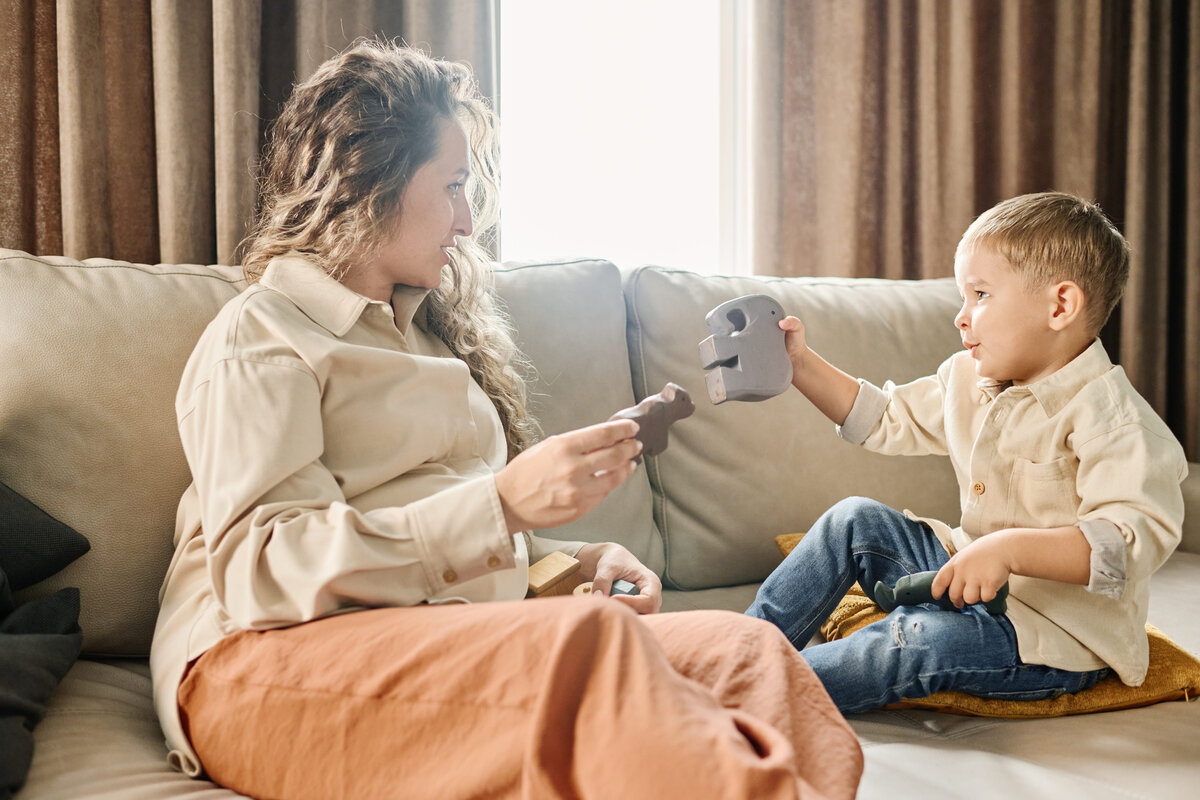
Many people find that calm discipline strategies work best when they are paired with empathy and a steady routine. The focus is teaching, not payback.
How to Choose a Consequence
- Name the limit briefly.
- Example: “Markers are for paper.”
- Pick a consequence connected to the behavior.
- Example: “If markers go on the wall, the markers are put away until tomorrow.”
- Keep it short and doable. Brief consequences are often easier to follow through on.
- Deliver it without a lecture.
- Example: “You hit with the toy, so the toy is taking a break.”
- Return to normal interaction once the moment has passed. Reconnection helps the lesson land without shame.
If-then Examples
- If a toy is thrown, then the toy is removed for a short period.
- If a child refuses to wear a coat, then bring it along and let them feel the weather briefly if safe.
- If a teen misses curfew, then the next outing has an earlier return time.
Calm consequences are not threats you cannot keep, punishments chosen in anger, or responses that have nothing to do with the behavior. If a consequence starts to feel like revenge, pause first.
Boundary-Setting Language by Age
Child behavior boundaries often work best when they match a child’s developmental stage. A toddler usually needs fewer words and more support in the moment. A teen can handle more discussion, but still needs clear limits. Many families find that fewer words work better during conflict, while longer conversations go better later.
Young Children
- Get low and close.
- Example: “I won’t let you hit. Hands down.”
- Use simple words.
- Example: “Blocks stay on the floor. Put them in the bin.”
- Block unsafe behavior if needed. Gently stop the action when safety is at risk.
- Redirect to the next action.
- Example: “Toy stays here. Come hold my hand.”
School-Age Children
- State the rule.
- Example: “Homework starts now.”
- Give one choice within the limit.
- Example: “You can begin at the table or the desk.”
- Follow through.
- Example: “If homework doesn’t start now, screen time waits until it’s done.”
Teens
- Lead with respect.
- Example: “I hear that you’re upset.”
- Be direct about the limit.
- Example: “I’m not arguing about curfew tonight.”
- Invite problem-solving later.
- Example: “We can talk tomorrow about what would make trust easier.”
What to say after a hard moment
A repair conversation after conflict is a short talk that helps rebuild safety and connection after yelling, snapping, or a tense power struggle. It does not erase the limit. It shows steadiness, honesty, and accountability.
Repair can be especially helpful after yelling, after a consequence that led to tears or shutdown, or after a conflict that left distance between you. If repair feels awkward at first, that is common. Even a brief, sincere apology can matter.

How to Have a Repair Talk
- Wait until both of you are calmer.
- Example: “We were both upset. Let’s talk now that we’re calmer.”
- Name what happened simply.
- Example: “I yelled during homework time.”
- Take responsibility for your part.
- Example: “I was frustrated, but it was not okay for me to shout.”
- Restate the limit.
- Example: “The rule about hitting still stands.”
- Ask what might help next time. This can support problem-solving.
- End with reassurance and a plan.
- Example: “I love you, and next time I’m going to pause before I answer.”
A Simple Repair Script
“When ___ happened, I felt ___ and I raised my voice. I’m sorry for how I spoke. The limit is still ___. Next time I will ___. What might help you when you’re upset?”
Repair is not the same as giving in. In many families, it can actually strengthen authority because it shows that limits can stay firm without fear or shame.
Building a Calmer Pattern Over Time
Learning to raise your child more calmly usually happens through small repeated shifts, not one perfect response. If this feels hard, you are not alone. Progress may look like noticing one trigger sooner, pausing a little faster, and repairing a little more clearly.
You might try this plan for the week:
- Track one trigger. Notice one pattern, such as rushed mornings or bedtime stalling.
- Practice one pause tool. Use the 10-second pause or one slow exhale.
- Keep one boundary script and one repair phrase ready.
- Example: “Shoes on now, then door,” and “I’m sorry I snapped.”
If anger feels frequent, frightening, tied to past trauma, or hard to control despite your efforts, support may help. A therapist, parenting coach, or family counselor can help many people build safer patterns with less shame.
If you’re in immediate danger or thinking about harming yourself, call local emergency services or a crisis hotline in your country. In the U.S., call or text 988.